
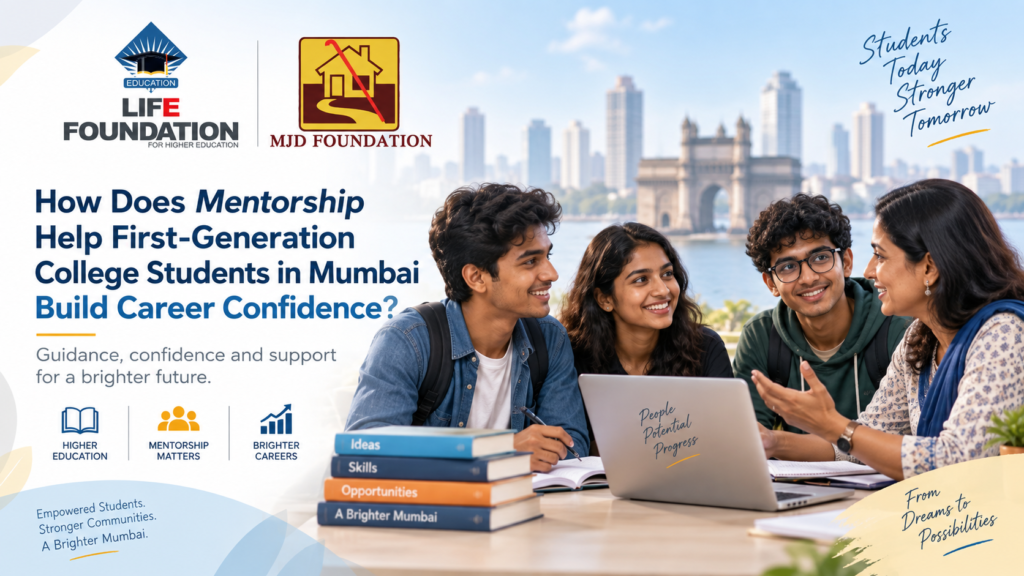
How Does Mentorship Help First-Generation College Students in Mumbai Build Career Confidence?
For many young people, being the first in the family to attend college is a proud milestone, but it can also come with uncertainty. Mentorship for First-Generation College Students in Mumbai can help bridge that gap by offering career guidance, practical advice, communication support, and encouragement. With the right mentor, students can better understand career options, prepare for interviews, build confidence, and make informed decisions about higher education and future opportunities. Which career should I choose? How do I prepare for an interview? What should I write on my resume? Should I pursue higher studies? How do I speak confidently with professionals? Students whose parents or close family members have not attended college may not always have someone at home who can answer these questions. They may be hardworking and capable, yet still feel unsure about how the professional world works. This is where mentorship can make a real difference. A trusted NGO in Mumbai can support students not only through education but also through career guidance, mentoring, skill development, and exposure to real-world opportunities. At MJD & Life Foundation, student support is about helping young people move forward with greater confidence, clarity, and independence. What Is Mentorship for First-Generation College Students? Mentorship is a supportive relationship where an experienced person guides a student through education, career choices, skill development, and personal growth. For first-generation college students, this guidance can be especially valuable because they may be navigating higher education and career planning for the first time in their family. A mentor does not make decisions for the student. Instead, they help the student understand their options, ask better questions, recognise their strengths, and make informed choices. Mentoring may include help with: For many students, having one dependable person to ask, “Am I moving in the right direction?” can reduce a lot of uncertainty. Why Do First-Generation College Students Need Mentorship? Getting into college is only one part of the journey. A student may be the first person in their family to attend university, which means their parents may be proud and supportive but may not know how internships, placements, postgraduate courses, corporate interviews, or professional networking work. That creates several practical challenges. Limited Career Exposure Students may only know about careers they commonly see around them. A commerce student may think only of accounting or banking. A science student may believe medicine or engineering are the only options. Mentorship introduces students to a wider range of careers and helps them understand what different roles actually involve. Lack of Professional Networks Many career opportunities come through conversations, referrals, college networks, workshops, and internships. First-generation students may begin without access to such networks. A mentor can help them understand how to approach professionals, attend career events, use LinkedIn appropriately, and build meaningful professional connections. Interview Anxiety A student may know the subject very well but struggle when someone asks: “Tell me about yourself.” That does not mean the student lacks ability. Often, they simply need practice. Mock interviews and regular conversations with mentors can gradually help students speak more clearly and confidently. Confusion About Higher Education Should a student pursue a master’s degree immediately? Gain work experience first? Take a certification course? There is rarely one answer that suits everyone. A Higher education support NGO in Mumbai can help students understand different educational pathways and think carefully before investing time and money in the next step. How Does Mentorship Build Career Confidence? Career confidence is not created through motivational speeches alone. It grows when students understand their abilities and repeatedly practise important skills. 1. Students Learn How to Talk About Their Strengths Many young people find it difficult to explain what they are good at. A mentor can ask simple questions: Think about the projects you have completed, the responsibilities you have handled, and the problems you have solved. Then reflect on what each experience taught you and how it helped you grow. Slowly, students begin to see that even college projects, volunteering, part-time work, or community activities can demonstrate useful skills. 2. Career Choices Become Less Confusing There are hundreds of career paths today. Without guidance, too many choices can become overwhelming. Mentors help students narrow those options by looking at interests, abilities, education, financial realities, and long-term goals. That does not mean choosing the student’s career for them. It means helping them make a better-informed decision. 3. Students Become More Comfortable With Interviews Interview confidence comes from practice. A mentor can conduct mock interviews, correct unclear answers, improve introductions, and explain how to respond professionally. Imagine a student who initially avoids eye contact and gives one-word answers. After several practice sessions, that same student may be able to explain their education, interests, and goals clearly. That change can be significant. 4. Students Understand Workplace Expectations College and professional life are different. Young people may need guidance on: Knowing these basics before entering the workplace can make the transition less intimidating. Mentorship builds career confidence by turning uncertainty into practical preparation. Students learn what to expect, how to prepare, and how to communicate their abilities more effectively. How Can an NGO in Mumbai Support Students Beyond Scholarships? Financial assistance is important, but education support should not end with paying fees. A strong student-development program combines financial support with guidance. An NGO in Mumbai may support students through: This approach matters because a student may successfully complete college yet still feel unprepared for employment. Education gets the student to one stage. Mentoring can help them understand what comes next. Why Is Higher Education Support Important in Mumbai? Higher education can open opportunities, but completing it can be financially demanding. Apart from tuition fees, students may need money for: For some families, these additional expenses create serious pressure. People who want to Donate for student education in Mumbai can contribute towards creating opportunities for students who are motivated to study but need support. Likewise, those looking to Sponsor a student’s education in Mumbai can help reduce financial barriers while giving a